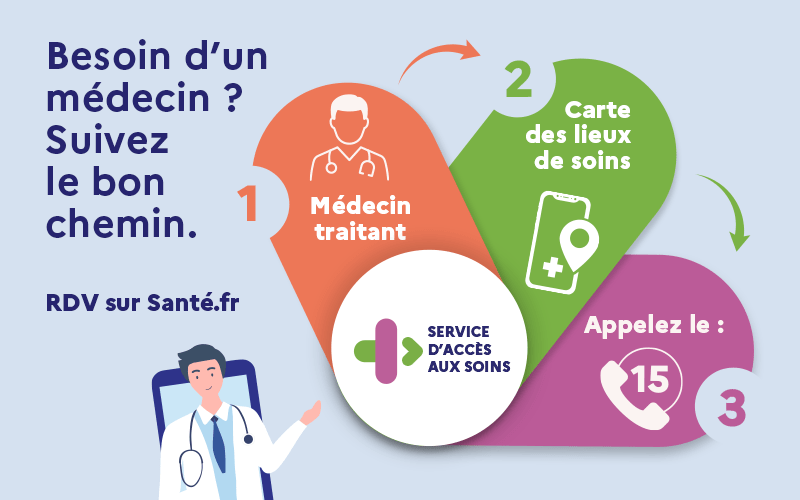
The Healthcare Access Service (SAS) is a new medical referral service accessible via the emergency number 15, designed to facilitate access to non-urgent care for the population of Lot-et-Garonne. Established as part of the Ségur de la Santé (a major healthcare reform initiative), it is part of a broader effort to overhaul the healthcare system, aiming to improve the coordination and efficiency of healthcare services in both community and hospital settings.
For the public: How does it work?
What is the SAS and what is its purpose?
The SAS (Service d'Aide Médicale - Medical Referral Service) is a medical guidance and assistance service that directs patients to the right care at the right time, without going through the emergency room when there is no life-threatening emergency. It is a concrete response to requests for care that are neither urgent nor scheduled, but still require intervention from a healthcare professional within 48 hours.
How do I use it?
What types of care are involved?
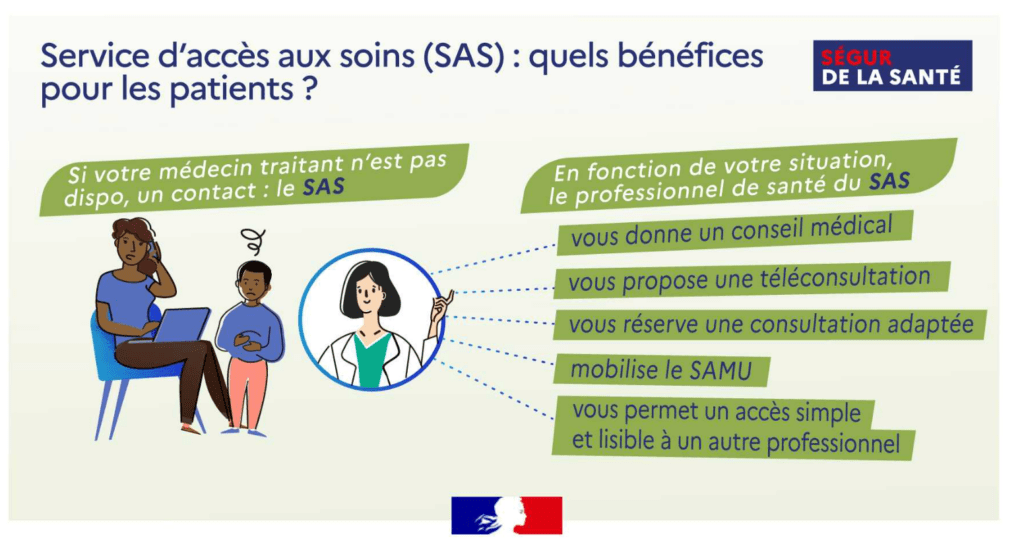
The SAS (Service d'Accès aux Soins - Healthcare Access Service) covers unscheduled care, such as medical advice, consultations with on-call doctors or nurses, or examinations that are not urgent but must be addressed within 48 hours. Examples include a consultation for a persistent fever, an injury, or a follow-up examination after treatment.
In practical terms, how does this work?
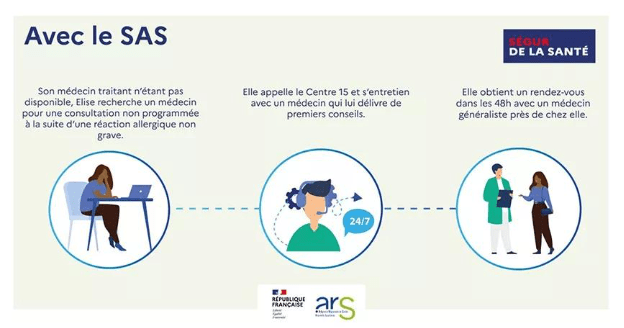
Why is SAS useful?
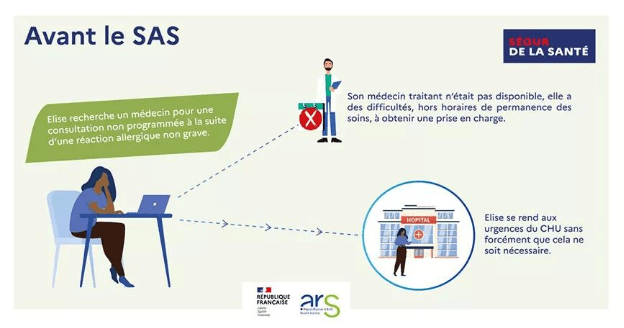
- Relieving pressure on emergency services : By directing patients to appropriate care, the SAS avoids overloading emergency services with non-urgent cases.
- Optimizes healthcare resources : Independent healthcare professionals and emergency services can thus manage urgent cases more efficiently.
- Rapid access to care : You get a quick response (within a few hours or 48 hours) depending on the nature of your need.
For healthcare professionals: How does the SAS work?
What is the mission of the SAS for you?
The SAS is a medical regulation that coordinates so-called "unscheduled" care between independent healthcare professionals and hospital emergency departments. Its objective is to reduce unnecessary emergencies through more appropriate management of unscheduled care.
How is the SAS organized?
- Joint regulation : Emergency services (SAMU) and independent professionals (doctors, nurses, etc.) work together via a shared regulation system to direct patients to the right care.
- 24/7 access : The service operates 24 hours a day, 7 days a week, with extended regulation hours for non-urgent care outside of the on-call hours for outpatient care (PDSA).
- Complementarity with the PDSA : The SAS covers the hours and needs not covered by the PDSA, which itself operates in the evening, at night, and on weekends/public holidays.
- Regulation and guidance Regulators assess needs and direct them towards:
- Medical or nursing consultations (on-call services)
- Teleconsultations (if possible and if the patient wishes)
- Medication prescriptions (possibly electronic)
- Examinations or direct admissions to a healthcare facility if necessary
What are the benefits for healthcare professionals?
- Reducing pressure on emergency services : your time is better used for life-threatening emergencies.
- Support for patients outside your opening hours : the SAS ensures continuity of care for non-urgent patients.
- Remuneration and recognition : your participation in the SAS is remunerated and recognized for consultations and actions carried out within this framework.
